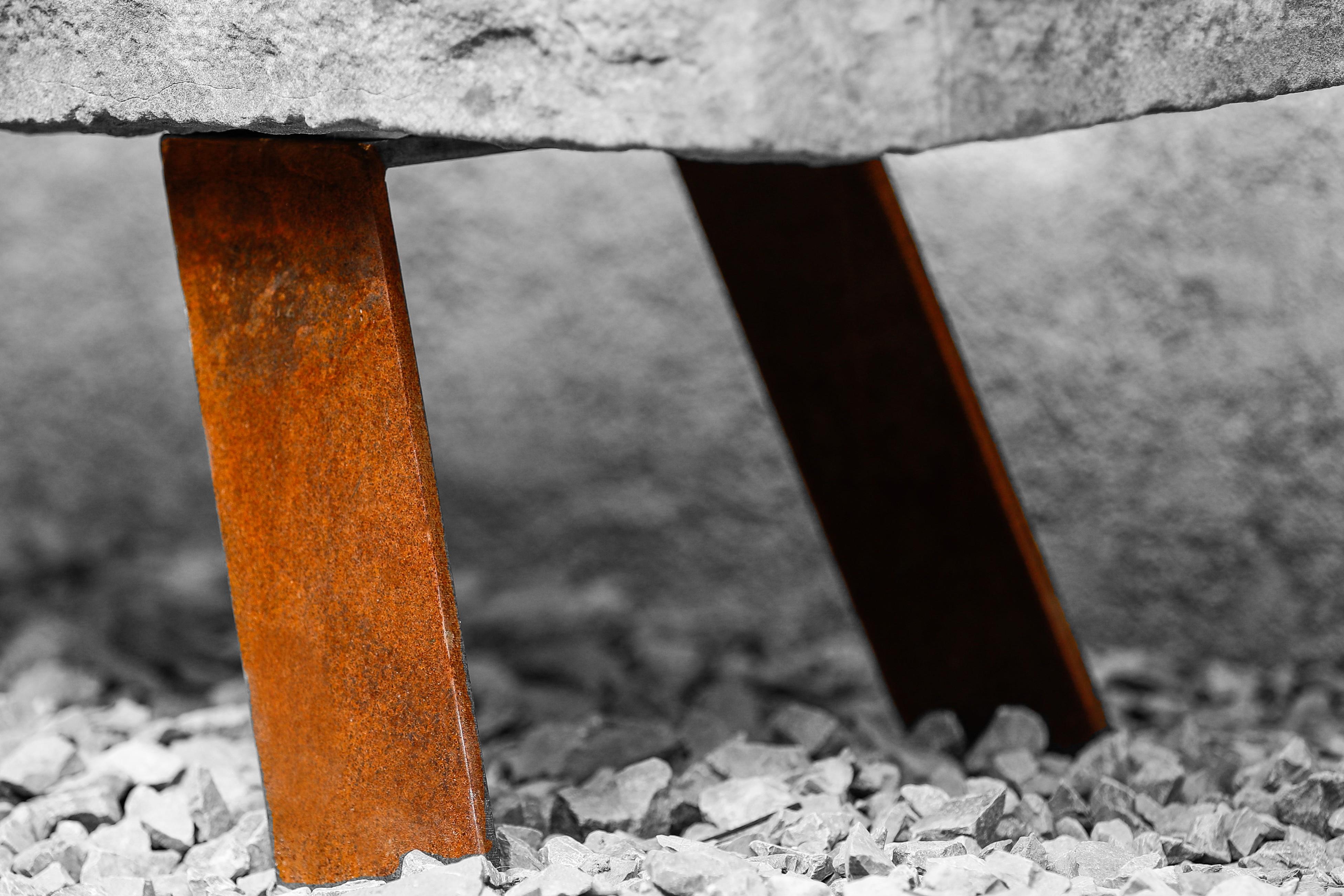
Drag month by month through the complete 72-month journey — with protection levels, runoff risk and stage-specific technical advice.
Raw mill steel
Fresh from the mill. Deep charcoal-black with a smooth, dense surface. No oxidation yet. This is the starting point most people don't expect — pure black steel.
First oxidation
First rain triggers the reaction. Dark streaks of warm brown break across the black surface. Unpredictable and raw — the steel is beginning its transformation.
Orange bloom
The vivid orange phase. The characteristic bright rust colour appears across the surface. This is the phase most people picture when they think of corten.
Red-brown depth
The surface deepens from orange toward warm reddish-brown. The oxide layer densifies and begins to adhere firmly. The steel core is becoming well-protected.
Amber maturity
Deep amber and burgundy tones develop. The patina is maturing rapidly — richer in sheltered zones, slightly lighter where fully exposed. Each season adds complexity.
Permanent finish
The final, permanent state. Dark burgundy-brown with refined texture and natural variation. Maintenance-free. Self-repairing. This surface will outlast everything around it.